Category Archives: DESIGN

What not to wear – child labour and cotton

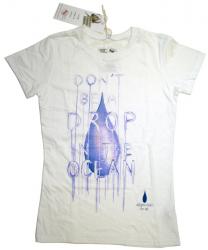
EJF fairly traded t-shirts

NOTE: This event has been re-scheduled from June when it was cancelled due to the tube strike

Title: What not to wear – child labour and cotton
Location: London
Link out: Click here
Description: Uzbekistan is the third biggest exporter of cotton in the world. Its booming cotton industry generates over US$1billion annually, but the industry, which largely supplies the European market, is underpinned by a system of state-sponsored forced labour, particularly of children.

This event will focus on what can be done to end the use of forced labour in the cotton industry. Considering the action taken by some retailers to ban Uzbek cotton from their products, why do other retailers continue to use it? How can we as consumers ensure that the products we buy are free from slave labour and that we are not inadvertently contributing to the problem?

Film Screening of White Gold: the true cost of cotton by the Environmental Justice Foundation followed by a panel discussion featuring Lucy Siegle, journalist, author and presenter (chair), Joanna Ewart-James (Anti-Slavery International), Juliette Williams (The Environmental Justice Foundation) and Steve Grinter (International Textile, Garment & Leather Workers’ Federation).

This event will be hosted by EJF, Amnesty International and Anti-Slavery International on October 8th at the Human Rights Action Centre in London.

Source: FEI
Start Time: 7pm
Date: 2009-10-08

Ethical Fashion Show Paris: Education For Sustainable Fashion

Title: Ethical Fashion Show Paris: Education For Sustainable Fashion
Location: Paris, France
Link out: Click here
Description: Fashioning an Ethical Industry will be hosting a round table on Education for Sustainable Fashion at the Ethical Fashion Show in Paris from 1pm to 3:30pm on Sunday October 4th 2009. The event will take place at Tapis Rouge: 67, rue du fg St Martin 75010 Paris.

Speakers and themes are to be confirmed. The event is aimed at fashion tutors and students but everyone is welcome. Tickets will be available from the Ethical Fashion Show website nearer the time.

Source: FEI
Date: 2009-10-04

Copenhagen Co’creation Summit: “Designing for Change 09”

Title: Copenhagen Co’creation Summit: “Designing for Change 09”
Location: Copenhagen, Denmark
Link out: Click here
Description:

2008 was the year when the well-described model for growth based on industrial thinking finally proved to be unsustainable in terms of economy, ecology and equity. We are not facing future change and challenges; we are in the midst of them – and will continue to be so for years to come. We need to approach this new reality with new tools and a new mindset – a mindset based on co-creation and design thinking.
Summit
The Danish Design Association has set out to gather in Copenhagen twenty-five international leaders, experts and practitioners to join an executive network for an inaugural summit, which will take place on August 29, 2009. The purpose of the summit is to address business issues of significant global interest through engaging in, exploring and developing new practices within co-creation and design.
Seminar
The following day, On August 30, we invite further 200 leaders, experts and practitioners to join the network at a seminar where the executive network will unfold and share their knowledge and discussions from the day before through talks, on-stage-interviews, workshops and discussions with the audience.
Manifesto
The outcome of the two days will form the Copenhagen Co’creation Manifesto. The Manifesto is a set of business actions based on the agenda of this year’s theme, Designing for Change, and is open and free for everybody to bring home and bring into practice.

Click here for a list of speakers, including
Bruce Nussbaum, BusinessWeek, Richard Grefé, AIGA, and Emily Pilloton, Project H Design.

Start Date: 2009-08-29
End Date: 2009-08-30

Project H: 5 Tenets for responsible design

Emily Pilloton is the founder of Project H. If you aren’t already familiar with the initiative, Pilloton’s Design (Anti) Manifesto will give great insight into the type of design goals Project H is working towards.

This week in Inspire, she wrote on the 5 tenets driving her organization.

There is no chapter without action.
Design with, not for.
Start locally, scale globally.
Document, measure and share.
Design systems not stuff.

This is definitely worth a read, with detailed examples on each. If these tenets were adopted by fashion design educators within their individual curriculum, fashion design students might realize their enormous potential and responsibility to design solutions.

You might also note that she has a new book coming out in September, with a forward from Allan Chochinov of Core77, titled Design Revolution: 100 Products That Empower People.

Below is an excerpt from the back cover. You can sign up here to receive an email notification when the book is available for purchase.

Urgent and optimistic, a compendium and a call to action, Design Revolution is easily the most exciting design publication to come out this year. Featuring more than 100 contemporary design objects and systems–safer baby bottles, a high-tech waterless washing machine, low-cost prosthetics for landmine victims, Braille-based Lego-style building blocks for blind children, wheelchairs for rugged conditions, sugarcane charcoal, universal composting systems, DIY soccer balls–that are as fascinating as they are revolutionary, this exceptionally smart, friendly and well-designed volume makes the case for design as a tool to solve some of the world’s biggest social problems in beautiful, sustainable and engaging ways–for global citizens in the developing world and in more developed economies alike. Particularly at a time when the weight of climate change, global poverty and population growth are impossible to ignore, Pilloton challenges designers to be changemakers instead of “stuff creators.”

Source: Core77 and Project H

New NLC Report on Human Rights violations in Jordan

NLC

A new report out of the National Labor Committee today cites multiple human rights violations at the Muse Textile Ltd. garment factory in Al Hassan Industrial City, Irbid, Jordan.

  • Human Trafficking
  • Primitive Dorm Conditions
  • Substandard Food
  • Forced Overtime and Seven-Day Work Weeks
  • A Failure to Communicate

Check out the full report, as well as the Ministry of Labor Report from July 19th. These workers still have 11 months left on their contract. The NLC is calling for the factory to be brought up to international standards and Jordanian law of compliance immediately.


Source: NLC

Oxfam Hong Kong launches new CSR report for the Garment Industry

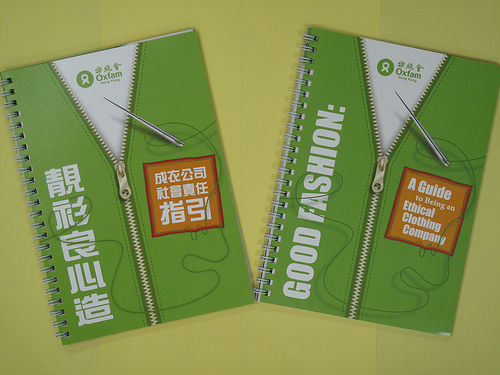
Oxfam CSR Guidebook

Oxfam Hong Kong has just launched a new guidebook for the garment industry titled Good Fashion: A Guide to Being an Ethical Clothing Company.

Although they encourage the use of the guidebook for educational use, as well as for research, advocacy and campaign purposes, be sure to notify them if you are going to use the guidebook so that they may assess its impact.


“As an active promoter of corporate social responsibility (CSR), Oxfam Hong Kong launches the first corporate social responsibility guidebook: Good Fashion: A Guide to Being an Ethical Clothing Company today. Good Fashion targets to support the garment sector in Hong Kong to further develop and implement CSR policy. In producing Good Fashion, Oxfam aims to raise awareness within the business sector on the importance of CSR and to encourage them to put CSR principles into practice.

The 71-page Good Fashion, which is divided into four sections, is a comprehensive guidebook containing practical tips for implementing CSR throughout the production process, such as merchandising and manufacturing. Good Fashion also includes CSR insights from various stakeholders, including workers, community organisations, union representatives, and other groups. Online resources and a simple checklist are also included for companies’ reference.”

You can download the full report in English (PDF) here.

Also, be sure to check out Oxfam Hong Kong’s previous reports. In 2004 they published Turning the Garment Industry Inside Out – Purchasing Practices and Workers’ Lives. They have also published two transparency reports: Transparency Report – How Hong Kong Garment Companies Can Improve Public Reporting of their Labour Standards (2006) and Transparency Report II: Have Hong Kong Garment Companies Improved Their Reporting on Labour Standards (2009).

Source: CSR Asia

Portland Fashion Week: Sustainable and Independent

Title: Portland Fashion Week: Sustainable and Independent

Location: Pearl District, Portland, Oregon
Link out: Click here
Description: As a longtime hotbed of creativity for modern art, design, and urban development, Portland is being unveiled as fashion’s best-kept secret.
On the runway since 2003, Portland Fashion Week is the second-longest running fashion
week on the West Coast. PFW stages the collections of the upcoming season through a
week-long series of high-production runway shows in downtown Portland, and exposes
independent designers to regional, national and international press, buyers as well as
style-savvy consumers.

Source: Portland Fashion Week
Start Date: 2009-10-07
End Date: 2009-10-11

Design Research Conference

DRC_ID_web_horiz_date

Title: Design research Conference
Location: Spertus Institute, Chicago, IL.
Link out: Click here
Description: The Design Research Conference (DRC), hosted by the IIT Institute of Design, brings together a growing community of design professionals advancing the role of design research in innovation.

The conference strives to spread knowledge through the discussion of compelling experiences and case studies, innovative methods and approaches, and the future and sustainability of design research.

Enthusiastic speakers interested in sharing their knowledge take the stage, enchanting the audience with best practices of design research and enthralling stories. The audience, two-thirds professionals and a third students, leaves with key takeaways: new ideas for further discussion and methods to throw into their own toolkits.

In its eighth year, DRC (formally About, With and For) will be more participatory in nature. Workshops, student presentations, twenty-minute lightning round TED style talks, and other group activities and networking opportunities will fill the two days.

Source: Core77 and IIT Institute of Design
Start Date: 2009-10-01
End Date: 2009-10-02

Designing Out Landfill; some notes and stats.

Thanks to Jo Angell at Puff and Flock for writing up some notes of the Designing Out Landfill Conference that took place on June 15th.  

It seems some highlights of the morning presentations included some interesting statistics.

Sophie Thomas, co-founder of Greengaged

  • UK households produce over 25 million tonnes of waste every year.
  • UK currently has 106 sq miles of landfill
  • One pair of shoes takes 8,000 litres of water to make
  • 1 computer requires 1.83 tons of raw materials to make


Kresse Wesling, founder of E&KO

Presented two case studies where 50% donated back to the material source.

  • bags from used fire hose pipes (West End belt worn my Cameron Diaz in June Vogue, p.95)
  • bags for Sainsbury’s from coffee sacks used to deliver the raw coffee

Nick Morley, Oakdene Hollins

  • 1 gallon of oil to make 1 kilo of polyester
  • ‘comingled collection’ bad for textile recycling through cross contamination
  • ‘diversion’ schemes good: Morley gave a shout out to Vancouver’s own Mountain Equipment Co-Op for encouraging their customer to sell and trade their used MEC products with other customers online.


Casper Gray, Director of Wax, Sustainable design and research

Suggested possible causes for the death (end of life) of textiles:

  • Fashion
  • Boredom/change
  • Bad fit
  • Wear
  • Damage
  • Loss

Other Causes:

  • Off cuts and errors (during manufacturing)
  • fabric samples

According to Angell, Gray “implied that designers could have a stronger role in improving these aspects.”

Click here, for the full write up at Puff and Flock, a London based textile collective, that it’s a great resource for critical textile design thinking.

Source: Puff and Flock

The University of Delaware’s Sustainable Apparel Initiative (UDSAI)

University of Delaware’s Sustainable Apparel Initiative offers ten policies for apparel brands and retailers to implement into their business practices. Click here to learn more about the policies and the initiative. Although all ten policies are crucial considerations for sustainable practices, “Policy 5: Consider and implement end-of-life strategies (recycle, renew, or reuse) when choosing materials, designing, and producing apparel”  pays particular attention to design through suggested best practices in both material and design assembly considerations. In the context of socially responsible fashion design education, how can these policies be integrated into your fashion curriculum? Early next week, Social Alterations will be opening a members based discussion forum for fashion and apparel educators to ask questions and share ideas on how to best approach social and environmental concerns within the industry in their design classrooms. I hope you will join in on the conversation and share your ideas with this community.

Press Release: UD publishes sustainable apparel business guidelines

What does it mean for a clothing or footwear company to be environmentally sustainable? Browsing some brands’ Web sites, you might think a company can lessen its impact on the environment just by using organic cotton in some of its clothing. But it’s not that simple.

The University of Delaware’s Sustainable Apparel Initiative (UDSAI) is demystifying the process of becoming more environmentally sustainable for brands and retailers. Companies seeking this information are invited to read and utilize UDSAI’s recently produced policy guide, “Creating a More Environmentally Sustainable Apparel Business: Policies for Apparel Brands and Retailers.”

“Sustainability is the ‘buzz’ throughout all industries. The problem is there is no clear definition of what this means,” said Rick Horwitch of Bureau Veritas Consumer Products Services. Bureau Veritas is an international firm that helps clients comply with standards and regulations relating to quality, health and safety, environment and social responsibility.

“I applaud the University of Delaware for taking on this daunting task of trying to put some structure and context around this very important issue. UDSAI will help bring clarity and direction,” Horwitch said.

University of Delaware faculty and students collaborated with industry professionals involved with environmental sustainability to research best practices.

“The apparel industry is predicated on change and planned obsolescence, which often results in overconsumption and waste throughout the value chain,” said Huantian Cao, UD associate professor of fashion and apparel studies and co-director of UDSAI. “UDSAI attempts to provide some simple guidelines that, when followed, will result in a more sustainable company.”

Source: UD News Releases