Category Archives: DESIGN

Inspired by Nature//Experiments in Jewellery

CecaGreenJewelry02

Check out these amazing experiments in jewellery from Bulgarian artist Ceca Georgieva.

Writer, editor, and environmental artist, Abigail Doan from ecco * eco (pronounced ‘ekko – eeko’) is said to be collaborating with Georgieva for a Winter 2010 project.

Looking forward to it!


Source: Abigail Doan and Ceca Georgieva

Sustainable Fashion Forum (SFF)

SFF

Title: Sustainable Fashion Forum
Location: Hong Kong
Link out: Click here
Description:

“Sustainable Fashion Forum (SFF) is an interactive half-day event for the fashion industry to come together and discuss a like-minded concern: The Sustainability of Fashion. The forum will address issues such as ethical sourcing, eco-friendliness, moving beyond green washing, what best practice means today, profitability and innovation.”

WRAP_logo

The Sustainable Fashion Forum is supported by Worldwide Responsible Accredited Production (WRAP).

Session 1: What is Sustainable Fashion?

Session 2: Is Sustainable Fashion Profitable?

Session 3: Who is Sustainable Fashion?

For more information on sessions and panellists, and to register online, click here.

Click here for the press release.

Start Time: 1:30
Date: 2009-10-07
End Time: 6:30

Centre for Sustainable Fashion Competition: Fashioning the Future

Image via Centre for Sustainable Fashion, London College of Fashion

Image via Centre for Sustainable Fashion, London College of Fashion

“Fashioning the Future brings together a global community of creative thinkers and doers, designers, innovators and entrepreneurs ready to offer the fashion industry opportunities for the future.

Founded in 2008, Fashioning the Future has been developed to include a wider range of disciplines, now with seven separate awards, celebrating and promoting a generation of emerging talent for the fashion industry of the future.

The possibilities for our future lie in the ingenuity of our creative minds. The competition is the leading international platform for celebrating innovation in sustainable fashion design, development and communication and we hope students and recent graduates from across the global fashion industry are inspired and excited to contribute through their work.

The underlying issue of consumption, the theme for the 2008 awards, will continue to be a crucial issue to fashion and its sustainability. Aligned to this, the theme for 2009 is Water, and there is a specific cross-discipline award focusing on this.”

Closing date 7 October 2009 at 1600hrs GMT.

Source: Centre for Sustainable Fashion, London College of Fashion

Valentino, Anna Wintour and Coco Chanel, before Chanel

If you are interested in the inner workings of the world of fashion, these movies will introduce you to some influential players: Valentino, Anna Wintour and Coco Chanel, before Chanel. These films will no doubt offer insight into the way in which certain design decisions, made by only a few influential individuals, have impacted the entire industry.

What are the negative/positive consequences of such influential decisions?

Here are the trailers:

FEI: Call for Academic/Research Papers and Student Projects

FEI Image

Fashioning an Ethical Industry International Conference: Fast Forward will take place on the 2nd and 3rd March 2010. It will bring together educators, industry experts, academics and selected students to explore how fashion can be taught to inspire responsibility for the rights of the workers making our clothes.

Alongside our set programme of speakers with expertise in the industry, we will provide the opportunity for the presentation of academic research papers and for students to present their project or dissertation work at the conference.  

Academic/Research Papers Papers are welcomed that address the following or related themes:

  • Social responsibility in the garment industry (with an emphasis on garment workers’ rights)
  • Teaching ethics within fashion education
  • Approaches to education for sustainable development relevant to fashion education

Students are invited to apply for the opportunity to showcase their project, design or dissertation work which addresses social responsibility in the garment industry. If you are a tutor please encourage your students to make a submission. 

Academics and students interested in participating in this event should submit an abstract by 30th October 2009 of 500‐700 words to liz _at_ fashioninganethicalindustry.org (replace _at_ with@). For more information on submitting papers please see the attached PDF.

Source: FEI

Fairtrade Urban Shoes: Canadian Newcomer Oliberté and Veteran Veja

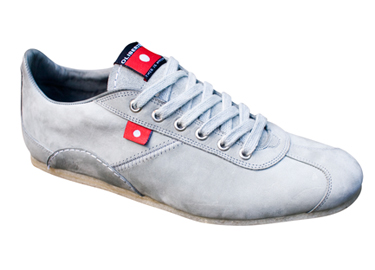
Rovia (mens) Grey Suede4

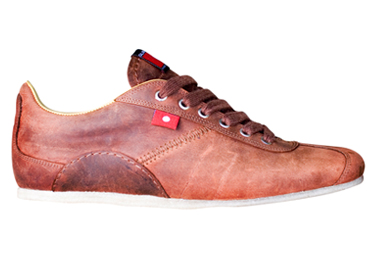
Thanks to Ethical Style for letting us know about Canadian designer Tal Dehtiar’s new shoe line, Oliberté. Oliberté claims to be the first footwear company to make urban shoes exclusively in Africa – based on Fairtrade principles. The shoes are made from locally sourced materials (leather and rubber) in West Africa (starting in January). Speaking on the issue of poverty in the continent, Dehtiar argues that “the only real way to alleviate poverty on this beautiful continent is to build a middle class that includes fair paying jobs.”

Rovia (mens) Grey Suede5

It will be interesting to see how this line develops. As of yet, there are no real details on the Fairtrade and/or environmental nature of its supply chain (i.e. wages or factory conditions- tanning leather is often associated with pretty nasty chemicals, as well as the harsh glues that may be used in assembly, etc.), as the company is not yet certified Fairtrade. I expect that more information on production will be made available on the website soon: Treehugger has reported that “[t]he company is working in partnership with factories to improve their environmental footprint. As they say: ‘we still have a long way to go, but we will continue to do all we can improve our materials, our production and our shoes.’ Oliberte will be supporting local training in the communities where they work.” Treehugger also reports that Oliberté is “consulting with the tanneries to meet environmental standards.” Thus, stay tuned for updates from this Canadian company.

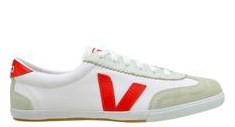
One urban footwear company that has seemingly managed to maintain it’s foothold in Fairtrade manufacturing is Veja.

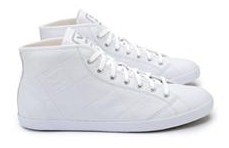
Veja Volley


If you aren’t already familiar with Veja, be sure to check them out straight away. Asking the question “Is another world possible?” Veja uses and supports wild latex production in the Amazonia to fight against deforestation:

Veja The GridVeja soles are made of natural latex coming straight from the Amazon Forest in the Chico Mendes reserve. The Amazon is the only place on earth where wild rubber trees are to be found […] Their activity, which does not require putting down any tree, is a great way to preserve the world’s largest forest. Natural rubber is renewable and biodegradable, as opposed to synthetic rubber or plastic, which is produced by using fossil and non-renewable materials. 

Veja also uses organic cotton, supports family agriculture and local cooperatives and uses ecological leather rather than chrome tanned leather (Veja has defined ecological leather as “chrome-free leather tanned with organic compounds only”). For more up-to date information on the happenings over at Veja, be sure to follow their blog.

Sidebar: Veja has just launched its first line of ethical bags, four years after introducing its trainers.

Veja Projet Numero Deux2

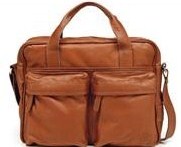
About these bags: organic cotton and leather tanned without chromium.


Source: Ethical Style, Treehugger, Oliberté, The Globe and Mail, PR Web and Veja

Images courtesy of: Oliberté and Veja

A closer look into Gap Inc.’s new Clean Water Program

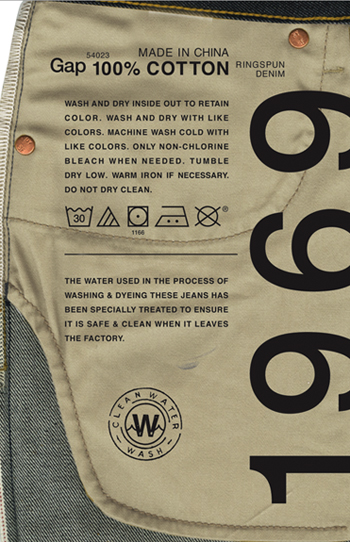
Gap Image from Greenbiz

Gap Inc.’s Clean Water Program, established in 2004 to monitor water contamination, has now grown into a system that advertises zero waste from the factory. Inside the pocket of each pair of 1969 jeans you will find this statement:

“The water used in the process of washing & dying these jeans has been specially treated to ensure it is safe & clean when it leaves the factory.”

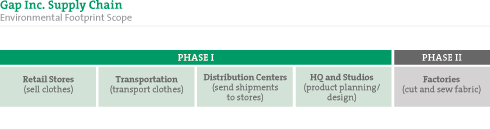
Here’s a closer look at how Gap Inc. breaks down its environmental footprint:
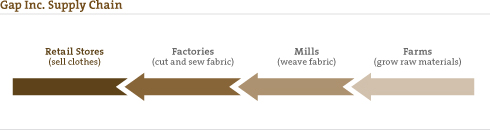
Gap Inc Supply Chain

“The first phase of our environmental footprint assessment focuses on regions and facilities where we control operations and can make changes most easily. It includes our 11 headquarters (HQ) buildings, five design studios, seven distribution center campuses, and more than 2,800 stores in our North American fleet. Scheduled to be completed in 2009, this first phase will examine energy, water usage, effluents and waste (including wastewater, solid waste and hazardous waste).

The second phase of our assessment will focus further into our supply chain, where we have less direct influence but greater opportunity for impact. We expect to begin the second phase to begin in early 2010”
Gap Inc Supply Chain

Unfortunately, the company does not appear, as of yet, to have goaled itself to take on the materials end of its supply chain. This is an oversight in responsible water-use, considering that 1kg of cotton requires 8000 litres of water. Not only does the materials end of the spectrum use a lot of water, but conventional cotton, with its heavy use of chemicals, results in dirty effluents.

On the Raw Materials end of the spectrum, low-water use cotton may be one option the company will be investigate in the future. Low-water use cotton is often rain-fed. Rain-fed cotton, however, risks the outcome of having a lower quality to it due to irregular water patterns (Fletcher). It will be interesting to see how the company tackles this phase of the lifecycle in the years ahead.

Lifecycle analysis should follow the impact of a garment at every stage: material, production, transportation, use, and disposal. One look at Gap Inc.’s supply chain and it becomes clear that the consumer is not considered in the environmental impact assessments. This is another oversight in the clean water program. Using the example of a simple T-shirt, Kate Fletcher states that consumer use

“has the highest impact and the effect of reducing the energy used in washing, drying and ironing […] dwarfs the possible effects of changing production methods.” (Fletcher)

This suggests that no matter what changes a company makes to clean-up water on the production side, heavy water use and dirty effluence on the consumer end may render such changes minimal when considered against the entire lifecycle of a garment.

One way the company could reduce both water use and contamination immediately is to start promoting responsible laundry habits, and engage consumers in the process. This could be as simple as creating a user friendly online site recommending best practices for each style of jean. This would involve simply directing customers to site for information and instructions.

In the future, why not add some responsible water care labels to each garment tag (a responsible extension off the already present ‘how to care for this garment’ instructions). For example, recommended laundry detergents, how much soap to use, and instructions on ways to avoid the dryer. (A common complaint about jeans that have been left to hang dry is that they wind up feeling stiff. Simple tip to avoid this is to air dry first, and then, if you have to, pop them in the dryer to soften them up for a few minutes before you wear them).

Of course there may be no real way of tracking consumer progress on the user end, but that’s no reason not to get behind consumer education when it comes to water consumption and the laundry machine.

Taken further, each Gap Inc. store would be able to provide consumers with the correct information on laundry detergents that are appropriate for the local water system in that particular area. Gap Inc. certainly has the resources to implement a program like this. Whether or not consumers will follow recommendations, is another story all together! Imagine the possibilities for a program like that.

Regardless of any oversights in the program, kudos to Gap Inc. not only for taking on this initiative, but for effectively implementing the goals it set out to achieve. This program will no doubt inspire competitors to think about water effluents and waste in their own supply chain.

Source: GreenBiz and Gap Inc.

Work Cited: Fletcher, Kate. Sustainable Fashion and Textiles: Design Journeys. London: Earthscan, 2008.

Digital Patterns: Downloading the Future of Design


This is a design concept that attempts to decrease waste on the manufacturing and transportation end of the lifecycle of a garment and eliminate mass production. In the process, SANS has encouraged a new way for consumers to relate to their clothing to develop a relationship with the garment itself. Means of production and transportation, as well as material selection, are in the hands of the consumer. The result: “extravagant” and “complex” clothing does not need to come at such a high price (social, environmental, or $$$).

pattern_summer-dress

pattern_smile-womens

Source: Core77 and SANS

The Designers Accord Global Summit on Design Education & Sustainability

DA_edu_summit

NOTE: Although this event is invite only, information gathered at the summit will be compiled into a toolkit that will be made available through the Designers Accord, for free.

Title: The Designers Accord Global Summit on Design Education & Sustainability
Location: San Francisco
Link out: Click here
Description:

Overview
In San Francisco, on October 23 and 24, 2009, the Designers Accord will convene 100 individuals (an invited group of undergrad and graduate design education faculty and administrators, thought-leaders, experts, and select student ambassadors) for two days of highly participatory discussion, planning, and action around the topic of sustainability and design education.

The Summit is structured so that we address the critical topics in design education and sustainability, and create a toolkit for people to use right away. The formula:

100 educators, administrators, and thought-leaders
48 hours in San Francisco
6 inspirational – 30 minute speeches
8 breakout worksessions of highly participatory small group brainstorming
1 open exhibition of work, projects, programs
Time to talk, think, learn, problem-solve, and imagine possibilities

Goal
We will draw on the experience and knowledge of our global community to tackle the critical issue of sustainability, consider how best to prepare our educational community to make real change, and imagine what’s next in design education.

Our goal is to have a lively and rich discussion during the summit, and then publish the best practices and recommendations for integrating sustainability into design and media programs to the public.”

Start Date: 2009-10-23
End Date: 2009-10-24


Source: The Designers Accord